
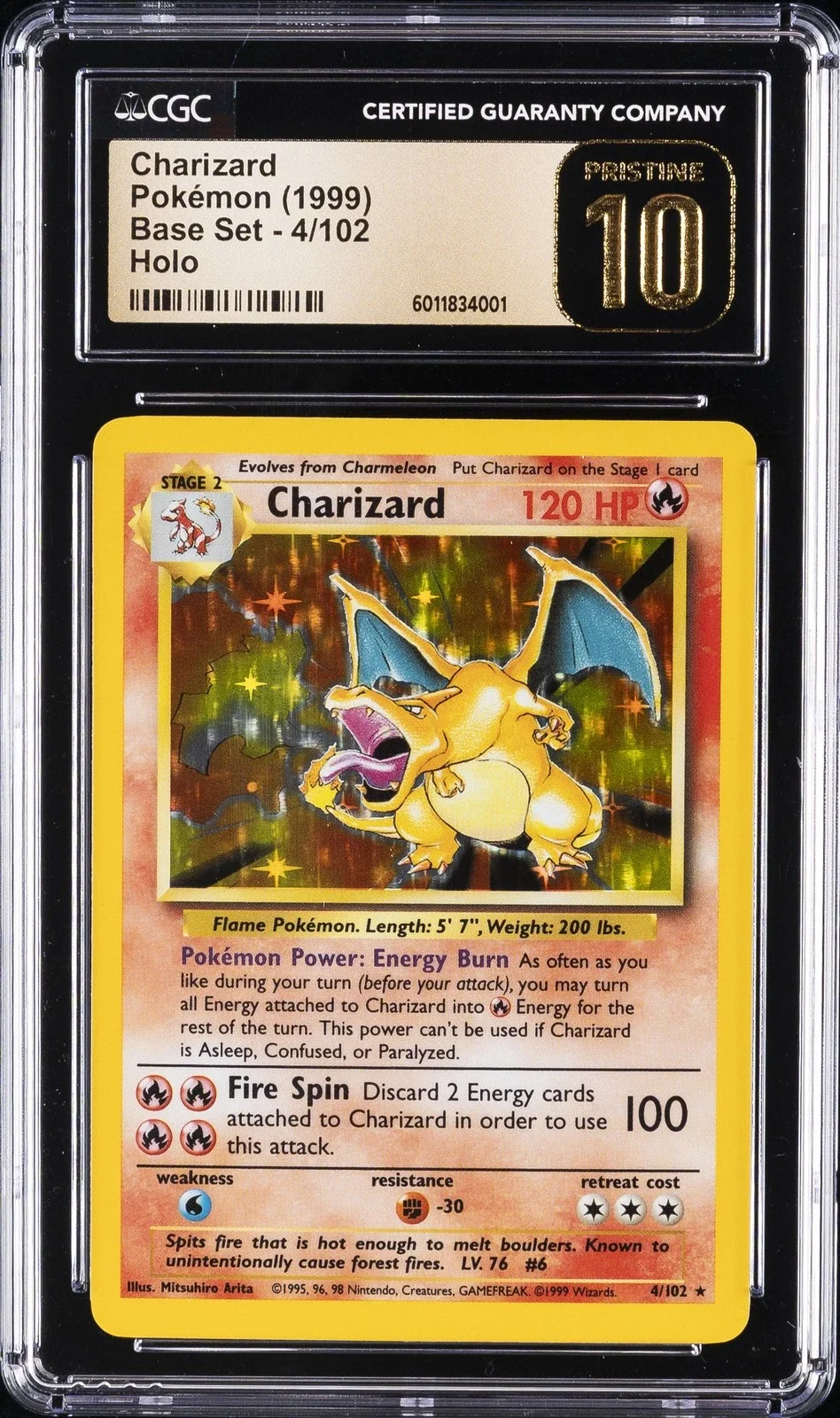
Ever wondered why one Pokémon card sells for a few cents while another can be worth hundreds or even thousands of dollars? Let's explore what makes certain Pokémon cards so special.
If you've spent any time looking at Pokémon cards online, you've probably noticed something interesting.
Two cards can feature the exact same Pokémon, yet have completely different price tags.
One might be worth a few dollars, while another could be worth considerably more.
So, what makes a Pokémon card valuable? Is it the rarity? The artwork? The Pokémon itself? Or is there a little bit of magic involved?
Let's break it down!
1. Rarity – How Hard Is It to Find?
One of the first things collectors look at is a card's rarity.
Pokémon cards come in different rarity levels, and some are much harder to find than others.
Depending on the expansion, you might come across:
Common: Cards that are generally easier to find.
Uncommon: Slightly less common than standard cards.
Rare: Cards that are harder to pull from booster packs.
Double Rare: Often associated with Pokémon ex cards.
Illustration Rare: Cards featuring special artwork that often showcases Pokémon in unique settings.
Special Illustration Rare: Highly sought-after cards with distinctive, detailed artwork.
Hyper Rare: Special cards often featuring gold finishes.
Rarity symbols and classifications can vary between Pokémon expansions, so it's always worth checking the specific set.
Here's the important part: rarity is only one piece of the puzzle.
A rare card isn't automatically an expensive card. If nobody is particularly interested in it, its market value might still be relatively low.
2. Popularity – Everyone Loves a Favourite!
Let's be honest. Some Pokémon are just incredibly popular.
Pikachu, Charizard, Eevee and Mewtwo have huge fan followings, and cards featuring these Pokémon can attract significant collector interest.
This means that two cards with similar rarity can have very different values depending on which Pokémon is featured.
A beautifully illustrated Charizard might attract far more attention than an equally rare card featuring a less popular Pokémon.
And sometimes it's not even about rarity. Nostalgia, childhood memories and personal favourites can make certain cards particularly desirable.
3. Artwork – When a Card Becomes a Little Masterpiece
One of the most exciting parts of modern Pokémon collecting is the artwork.
Some cards feature incredible illustrations that tell little stories about the Pokémon and the world around them.
Collectors often look for:
Unique illustration styles.
Beautiful backgrounds and scenery.
Interesting Pokémon interactions.
Artwork by well-known Pokémon card illustrators.
Cards that form part of a larger illustration or collection.
Illustration Rare and Special Illustration Rare cards are particularly popular because they offer something a little different from traditional card artwork.
Sometimes the artwork alone is enough to make a card a collector favourite!
4. Condition – Keeping Those Corners Perfect!
Imagine finding a card you've been chasing for months, only to discover it's covered in scratches and has a bent corner.
Heartbreaking!
A card's condition can have a major impact on its value.
Collectors generally look at:
Corners: Are they sharp and free from damage?
Edges: Is there whitening, chipping or wear?
Surface: Are there scratches, dents or marks?
Centering: Is the artwork and border positioned evenly?
Overall appearance: Does the card look clean and well preserved?
Cards in excellent condition are generally more desirable than heavily played or damaged copies of the same card.
This is also why protective sleeves and proper storage are so important.
5. Grading – Does a PSA 10 Make a Difference?
You might have seen Pokémon cards displayed inside hard plastic cases with a number at the top.
These are professionally graded cards.
Companies such as PSA, Beckett and CGC assess cards based on their condition and other quality factors, then assign a grade.
For example:
PSA 10 – Gem Mint.
PSA 9 – Mint.
PSA 8 – Near Mint-Mint.
Grading can make a significant difference to a card's market value, particularly when collectors are looking for examples in exceptional condition.
However, grading isn't a guarantee that a card will increase in value. The grading cost, card demand and market conditions all matter.
6. Supply and Demand – The Market Decides!
This is where things get interesting.
A card can be incredibly rare, but if very few people want it, its value may not be particularly high.
On the other hand, a card that lots of collectors are chasing can attract strong demand.
Things that influence demand include:
Popular Pokémon characters.
Nostalgia and older expansions.
Competitive play.
Artwork and illustrator popularity.
Limited availability.
Current collecting trends.
Pokémon card values can also change over time. A card that's extremely popular today might become less sought-after later, while another card could suddenly become a collector favourite.
That's why checking recent completed sales is much more useful than relying on an advertised asking price.
7. How Do You Find Out What Your Pokémon Card Is Worth?
If you've found a card that looks interesting, there are a few ways to research its value.
Step 1: Identify the card.
Look at the Pokémon's name, card number and expansion symbol.
Step 2: Check the condition.
Look carefully at the corners, edges and surface.
Step 3: Compare recent sales.
Look for completed sales of the exact same card, paying attention to condition and whether the card is graded or ungraded.
Step 4: Compare like for like.
A PSA 10 card shouldn't be compared directly with a damaged, ungraded copy.
Step 5: Remember that prices change.
Online listings aren't always an accurate reflection of what someone is actually willing to pay.
Useful places to research include eBay sold listings and specialist Pokémon card price-tracking websites.
So, Is Your Pokémon Card Worth a Fortune?
Possibly! But remember that the most valuable card in your collection isn't necessarily the one with the biggest price tag.
It might be the card you pulled with your family, the one you've been searching for since childhood or the artwork you simply can't stop looking at.
That's part of what makes Pokémon collecting so special.
At After Cards, we love everything about the hobby – from everyday favourites to those incredible cards that make everyone stop and take a closer look.
Keep collecting, keep discovering and may your next pull be a good one!
Have a card you're curious about? Come chat with us at After Cards. We love talking all things Pokémon!